 ★ 7.4
Acting
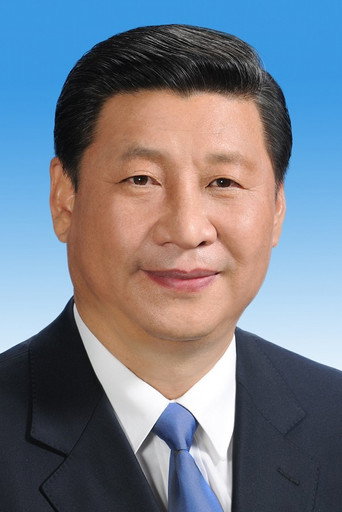
习近平
习近平 بیشتر به خاطر Explained، History 101، Patriot Act with Hasan Minhaj و Frontline شناخته میشود. 习近平 در ۱۵ ژوئن ۱۹۵۳ متولد شد. 习近平 73 سال دارد (متولد ۱۵ ژوئن ۱۹۵۳).
- تولد
- ۱۵ ژوئن ۱۹۵۳ (73 ساله)
- محل تولد
- Beijing, China
زندگینامه
Xi Jinping (born 15 June 1953) is a Chinese politician and statesman who has been the paramount leader of China since 2012. He serves as general secretary of the Chinese Communist Party (CCP) and chairman of the Party’s Central Military Commission, positions he assumed in 2012, and became president of the People’s Republic of China and chairman of the state military commission in 2013. He is widely regarded as the leading figure of China’s fifth generation of leadership.
Xi was born in Beijing as the son of Xi Zhongxun, a veteran revolutionary figure, and Qi Xin. During the Cultural Revolution, his father was purged, and Xi was sent to the rural village of Liangjiahe in Shaanxi province as part of the “sent-down youth” movement. There, he lived in a cave dwelling known as a yaodong, performed manual labor, and later became a local party secretary. After several unsuccessful attempts, he joined the CCP. He later studied chemical engineering at Tsinghua University as a worker-peasant-soldier student.
Xi’s political career advanced through regional leadership roles, particularly in China’s coastal provinces. He served as governor of Fujian from 1999 to 2002, then moved to Zhejiang, where he was governor and later party secretary from 2002 to 2007. In 2007, he was briefly appointed party secretary of Shanghai following a political scandal. That same year, he entered the Politburo Standing Committee, the highest decision-making body in China, and became a leading figure in the party’s central leadership. In 2008, he was named vice president, and in 2010 he became vice chairman of the Central Military Commission, positioning him as successor to Hu Jintao.
After assuming top leadership roles, Xi introduced extensive measures to strengthen party discipline and consolidate authority. His anti-corruption campaign targeted both high-ranking and lower-level officials, significantly reshaping the political landscape. He promoted the concept of “common prosperity,” aiming to reduce inequality, and implemented policies addressing poverty alleviation, economic restructuring, and technological development. His administration also increased the role of state-owned enterprises and emphasized national security and self-reliance.
In foreign policy, Xi has taken a more assertive approach, particularly in relations with the United States, territorial disputes, and efforts to expand China’s global influence through initiatives like the Belt and Road Initiative. His leadership has also seen tighter control over Hong Kong following the introduction of a national security law in 2020, as well as heightened tensions with Taiwan.
Domestically, Xi’s tenure has been marked by increased censorship, expanded surveillance systems, and controversial human rights policies, including actions in Xinjiang. He has overseen major reforms of the military and strengthened the CCP’s role across all areas of governance. In 2018, presidential term limits were removed, allowing him to extend his time in power, and in 2023 he secured a third term as president. His political ideology, known as Xi Jinping Thought, has been formally incorporated into both party and state constitutions, reflecting his central role in contemporary Chinese politics.
شناختهشده برای


کارنامه
- 2023Les camps, secret du pouvoir chinoisSelf (archive footage)
- 2023세 개의 전쟁Self (archive footage)
- 20222023年新年贺词国家主席
- 2022China: The Enemy WithinSelf (archive footage)
- 2020History 101Self (archive footage)
- 2019Главное с Ольгой БеловойПредседатель КНР
- 2018360°Self (archive footage)
- 2018ExplainedSelf (archive footage)
- 2018Patriot Act with Hasan MinhajSelf (archive footage)
- 2018탐사기획 스트레이트Self (archive footage)
- 2017NHK WORLD PRIMESelf (archive footage)
- 2015스페셜 탐사 스포트라이트Self (archive footage)
- 2011Mentiras verdaderasSelf (archive footage)
- 2001Democracy Now!Self (archive footage)
- 1983FrontlineSelf (archive footage)
- 1949中华人民共和国大阅兵合集主演
پرسشهای متداول
习近平 در چه فیلمها و سریالهایی بازی کرده است؟
习近平 بیشتر به خاطر Explained، History 101، Patriot Act with Hasan Minhaj و Frontline شناخته میشود.
习近平 کی متولد شد؟
习近平 در ۱۵ ژوئن ۱۹۵۳ متولد شد. (Beijing, China)
习近平 چند سال دارد؟
习近平 73 سال دارد (متولد ۱۵ ژوئن ۱۹۵۳).
بهروزرسانی: ۲۵ اکتبر ۲۰۲۶ ·