 ★ 4.8
Acting
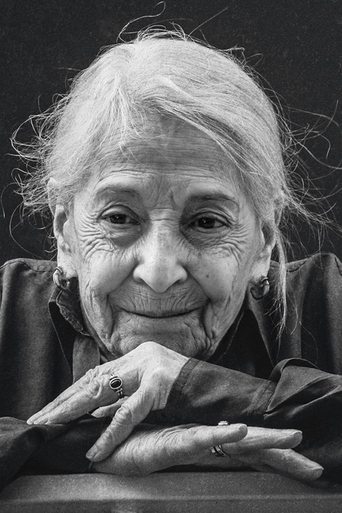
Αλέκα Παΐζη
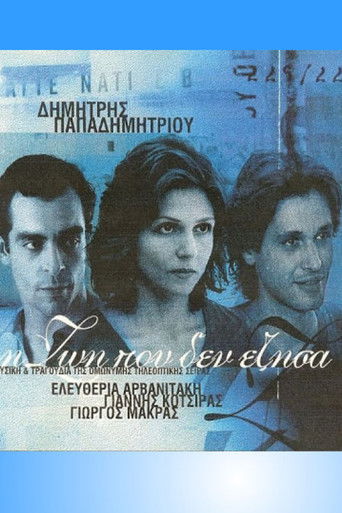
Αλέκα Παΐζη er mest kendt for Η Ζωή Που Δεν Έζησα, Η Πρόβα του Νυφικού, Οι απόμαχοι og Ακριβή μου Σοφία. Αλέκα Παΐζη er født 1. januar 1919. Αλέκα Παΐζη døde 4. februar 2009, 90 år gammel.
- Født
- 1. januar 1919
- Fødested
- Heraklio, Greece
- Død
- 4. februar 2009 (90 år)
Biografi
Aleka Paizi (Greek: Αλέκα Παΐζη, Heraklion, Crete, 1919 - Athens, 4 February 2009) was a Greek actress.
She studied at the Drama School of the National Theatre. Her family was financially comfortable, as her father was a tobacco manufacturer and experienced difficult times when he lost his business.
She made her theatre debut in 1941, playing Susanna in Carlo Goldoni's Fan, on the Main Stage of the National Theatre. In 1945 and 1946 she participated in the theatre group "United Artists", which was founded by order of the KKE as the cultural arm of the party. In 1946, she formed a troupe with Dimos Starenios and Tito Vandis, her first husband.
She collaborated with the troupe of Kostas Mousouris, Katerina, Elsa Vergi and others. From 1963 to 1966, she performed various roles in plays by the State Theatre of Northern Greece.
She made her film debut in 1957, in the film Barba-Yiannis, the juggler. She also played in the films O Mimikos kai imairi by Grigorios Xenopoulos, To paid tou dromo by T. Aliferis, Synikoia to oneiro by Alekos Alexandrakis, etc.
Abroad, she worked in Italian cinema. She also appeared on television, most famously in the role of Chrysostomi in Pantheoi by Tasos Athanasiadis, directed by Vasilis Georgiadis.
On 28 November 1994, at an event of the Hellenic Theatre Study and Research Centre, she was awarded the "Marika Kotopouli" award for her overall contribution.
In 2008, she participated in the exhibition and corresponding photographic album of nude portraits entitled "White Book" by photographer Takis Diamantopoulos.
Aleka Paizi was also a leftist activist: she participated in the National Resistance during the Occupation, through EAM and the KKE, she passed through Makronissos, Trikeri, and was arrested several times. After the declaration of the dictatorship in April 1967, she fled abroad. Returning to Greece after the Revolution, she collaborated with Leonidas Trivizas's People's Experimental Theatre, with Manos Katrakis, with Karolos Koun's "Karolos Koun" Art Theatre, etc.
She died on 4 February 2009, after a long health crisis, about a month before her starring role in "Moonlight Sonata", a stage adaptation of the poem by Yannis Ritsos, having served the theatre for more than 60 years. She was buried in the Second Cemetery of Athens, in a family grave.
Kendt for
Filmografi
- 1998Η Ζωή Που Δεν ΈζησαΙουλία
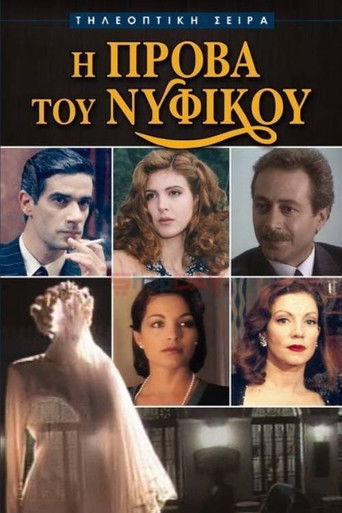
- 1995Η Πρόβα του ΝυφικούGrandmother
- 1990Ακριβή μου Σοφίαγιαγιά Σοφία Μινέικο
- 1982Οι απόμαχοι
Ofte stillede spørgsmål
Hvilke film og serier har Αλέκα Παΐζη medvirket i?
Αλέκα Παΐζη er mest kendt for Η Ζωή Που Δεν Έζησα, Η Πρόβα του Νυφικού, Οι απόμαχοι og Ακριβή μου Σοφία.
Hvornår er Αλέκα Παΐζη født?
Αλέκα Παΐζη er født 1. januar 1919. (Heraklio, Greece)
Hvor gammel er Αλέκα Παΐζη?
Αλέκα Παΐζη døde 4. februar 2009, 90 år gammel.
Opdateret: 30. oktober 2026 ·