 ★ 8.4
Acting
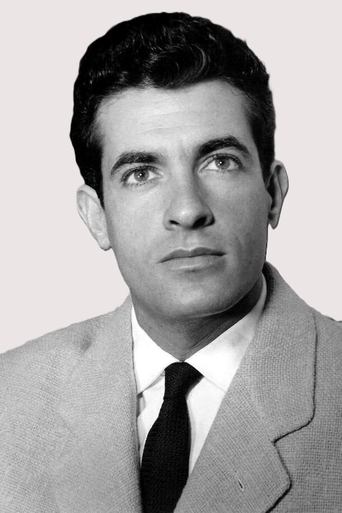
Germán Cobos
Germán Cobos tunnetaan parhaiten teoksista Aquí no hay quien viva, Proceso a Mariana Pineda, Arrayán ja Coup de foudre. Germán Cobos on syntynyt 7. heinäkuuta 1927. Germán Cobos kuoli 12. tammikuuta 2015 87-vuotiaana.
- Syntynyt
- 7. heinäkuuta 1927
- Syntymäpaikka
- Sevilla, Andalucía, Spain
- Kuollut
- 12. tammikuuta 2015 (87 v)
Elämäkerta
Germán Sánchez Hernández-Cobos (7 July 1927 – 12 January 2015) was a prolific Spanish actor in a variety of European films. Son of the stage actor Fernando Cobos, he spent part of his childhood in San Sebastian. He began studying Architecture and in 1949 he joined the Teatro Español Universitario (TEU), when he had already developed a vocation for acting. After moving to Madrid, where he enrolled in the School of Dramatic Art and the Official School of Cinematography, he made his first screen role in 1951, in Juan de Orduña's film La leona de Castilla. Shortly afterwards he was hired as a young leading man in the comedy company of Lilí Murati, a Hungarian actress who had settled in Spain. He had successes in the theatre, both in comedies such as Tovarich and Una noche en su casa, señora, as well as in dramatic pieces, such as La muerte de Dantón.
Despite this happy period as a stage actor, his true projection during the 1950s and 1960s was in the cinema, where he played tough leading man roles. His extensive filmography includes nearly a hundred films. After appearing in Rafael J. Salvia's Flight 971 in 1953, he subsequently made films such as El beso de Judas, La patrulla, La otra vida del Capitán Contreras and Cuerda de presos, directed by Rafael Gil and Pedro Lazaga. From 1955 onwards he spent a few years in Italy, where he appeared in Esclavas de Cartago and Susana pura nata and other commercial films. Back in Spain he played Sara Montiel's leading man in Carmen la de Ronda, directed by Tulio Demichelli in 1959. The following year he made a melodrama, Ama Rosa, by León Klimowsky, alongside Imperio Argentina.
His stage appearances were more sparse. In the 1960s he starred in Los derechos de la mujer, then the comedy Guapo, libre y español and, from the 1980s onwards, Del rey Ordás y sus infamias, La amante de su señoría and La marquesa Rosalinda.
Among the rest of his extensive filmography, the most notable are Un taxi para Tobruck, an important co-production that paired him with Hardy Kruger, Lino Ventura and Charles Aznavour, also filmed in 1960, as well as A las cinco de la tarde, by J. A. Bardem; La bella Lola, by Alfonso Balcázar, again as a partner to Sara Montiel; El valle de las espadas, by Javier Setó, both from 1962; La revoltosa, by José Díaz Morales (1963); Las Vegas, 500 millones, by Isasi-Isasmendi (1968); Marianela, by Angelino Fons (1972); Cría cuervos, by Carlos Saura (1975); El puente, by Bardem (1976); Solos en la madrugada, by José Luis Garci (1977); La ley del deseo, by Pedro Almodóvar (1987); El aire de un crimen, by I. Isasmendi (1987); Un paraguas para tres, by Felipe Vega (1992) and Boca a boca, by Manuel Gómez Pereira (1995).
He spent some seasons retired, running a hospitality business in La Granja de San Ildefonso (Segovia). On television he participated in 1995 in the series Villarriba y Villabajo.
Tunnettu teoksista

Filmografia
- 2003Aquí no hay quien vivaManolo
- 2001ArrayánArturo
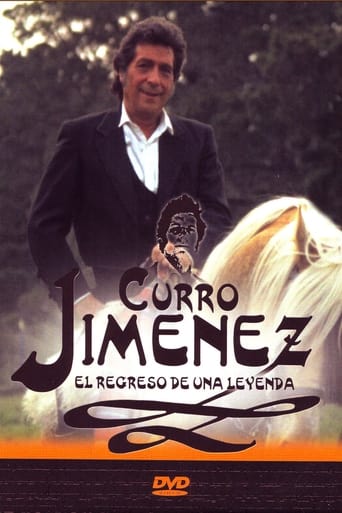
- 1995Curro Jiménez, el Regreso de una LeyendaDon Benjamín
- 1992Coup de foudreL'Homme à la Cornemuse
- 1984Proceso a Mariana PinedaJuez Pedrosa
Usein kysytyt kysymykset
Missä elokuvissa ja sarjoissa Germán Cobos on esiintynyt?
Germán Cobos tunnetaan parhaiten teoksista Aquí no hay quien viva, Proceso a Mariana Pineda, Arrayán ja Coup de foudre.
Milloin Germán Cobos on syntynyt?
Germán Cobos on syntynyt 7. heinäkuuta 1927. (Sevilla, Andalucía, Spain)
Kuinka vanha Germán Cobos on?
Germán Cobos kuoli 12. tammikuuta 2015 87-vuotiaana.
Päivitetty: 26. lokakuuta 2026 ·